A curved paver walkway can transform a simple route through a yard into an attractive and functional landscape feature. The featured project combines gray pavers with a contrasting red brick border and natural stone edging, creating a defined path that curves naturally through the surrounding landscape. This combination of paving materials provides visual interest while connecting the lawn and planting areas in a cohesive outdoor design.
Why a Curved Paver Walkway Works Well in Landscaping
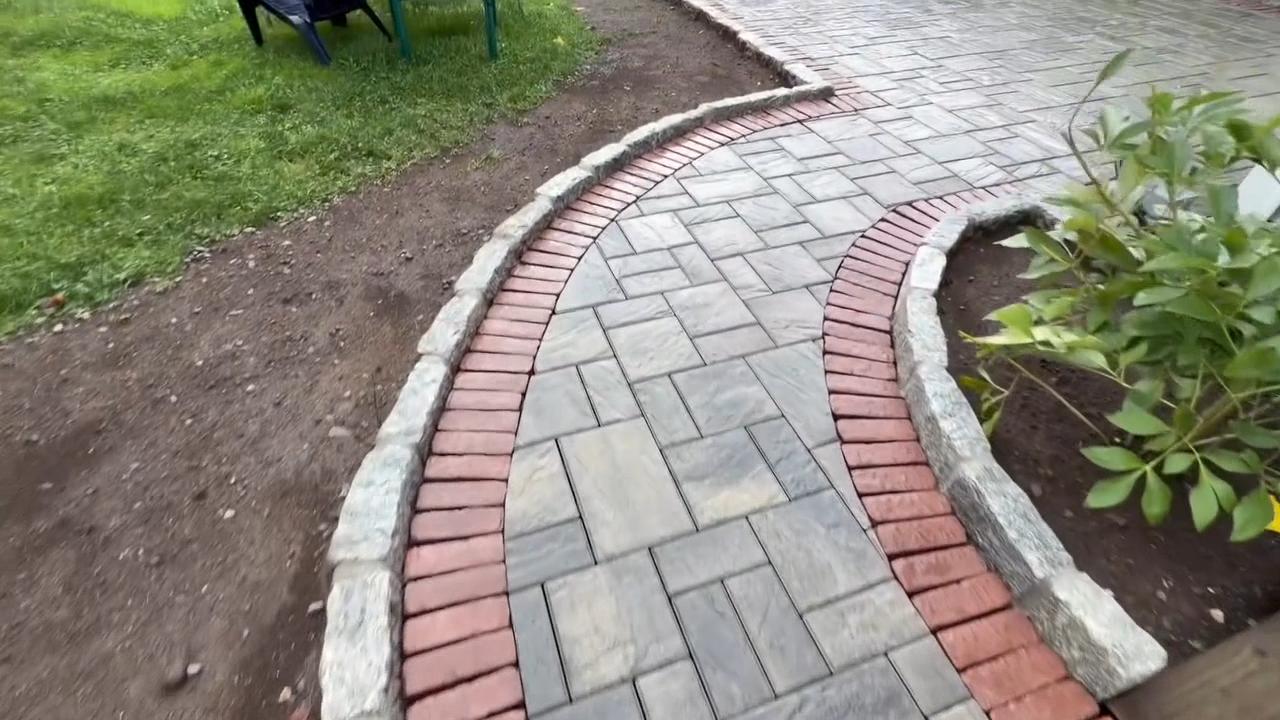
A curved walkway can create a softer appearance than a completely straight path. The sweeping shape shown in this project guides movement through the yard while working around the adjacent planting bed.
This type of design can be particularly useful when a walkway needs to connect different parts of a property without creating a rigid visual line. The curve allows the pathway to become part of the landscape rather than simply serving as a functional route.
For homeowners planning Landscape Installation, the walkway can also be coordinated with existing lawns, garden beds, shrubs, and other outdoor features.
Using a Brick Border to Define the Paver Path
The red brick border is a prominent design feature in this walkway. It runs along both sides of the gray paver surface and follows the curved shape of the path.
The color contrast helps distinguish the main walking area from its edges. The brick also emphasizes the sweeping shape, making the curve easier to see as the path moves around the planting area.
Combining different paving materials can give a walkway a more customized appearance. Instead of using one material across the entire surface, the brick border creates a secondary design element that complements the central pavers.
Natural Stone Edging Adds a Finished Look
Large natural stones form the outer edge of the walkway. They provide a strong visual boundary between the paved path and the surrounding soil and planting areas.
The natural stone also introduces a different texture from the manufactured pavers and brick. This creates a layered hardscape design where each material has a distinct role.
For homeowners considering Hardscaping Services, natural stone edging can be incorporated into walkway projects to define planting beds and create a stronger transition between hardscape and landscape.
Choosing Pavers for a Curved Walkway
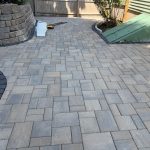
The gray pavers shown in the image use rectangular shapes arranged in a varied pattern. This type of arrangement gives the walking surface visual movement while maintaining a consistent overall appearance.
When designing a curved walkway, the paving pattern needs to work with the shape of the path. The curves, joints, borders, and transitions should be considered before installation begins.
A well-planned layout can help maintain consistent walkway proportions while allowing the path to follow the intended curve. Material selection should also complement the surrounding landscape and the architectural style of the property.
Connecting the Walkway With Planting Areas
One of the strongest features of this project is the relationship between the walkway and the planting bed. The path curves around the landscaped area rather than cutting directly through it.
The natural stone border creates a clear separation between the walking surface and the planting soil, while the greenery softens the appearance of the hardscape.
This approach can help homeowners create a more integrated outdoor environment. Walkway Paving does not have to be treated as a separate project from landscaping; the two can be designed together to create a unified property layout.
Preparing a Curved Paver Walkway for Long-Term Use
The appearance of a paver walkway is important, but proper preparation is equally important for its long-term performance. Site grading, base preparation, drainage, edge restraint, and correct paver installation all need to be considered.
Curved walkways can require careful planning because the borders and paving pattern need to follow the intended shape consistently. Proper preparation can help create a stable and visually clean finished surface.
The surrounding landscape should also be considered during planning. Water movement, planting beds, existing lawn grades, and access points can all influence the final walkway layout.
Creating a Custom Outdoor Path
The featured walkway demonstrates how several complementary materials can create a distinctive landscape feature. Gray pavers form the main surface, red brick highlights the curve, and natural stone creates the outer boundary.
For homeowners looking to improve a backyard or garden area, a customized walkway can provide practical access while adding definition to the surrounding landscape.
MDZ Crew Landscaping & Paving Inc. includes landscaping, hardscaping, walkways, walkway paving, paving services, and related services within its existing sitemap. This article focuses on the narrower curved-walkway design shown in the feature image rather than duplicating those broader service topics.
FAQ
What is a curved paver walkway?
A curved paver walkway is a pathway made from individual paving units and designed with a gradual curve or series of curves. It can be used to connect different areas of a landscape while working around planting beds and other features.
Can brick be used around a paver walkway?
Yes. Brick can be used as a contrasting border around pavers. In the featured project, the red brick border follows the curve of the gray paver surface and creates a distinct visual frame.
What is the purpose of natural stone edging?
Natural stone edging defines the boundary between the walkway and adjacent soil or planting areas. It also adds texture and contrast to the overall hardscape design.
Can a paver walkway curve around a garden bed?
Yes. A curved walkway can be designed to follow the shape of a garden bed or other landscape feature. This can create a more natural transition between different areas of the yard.