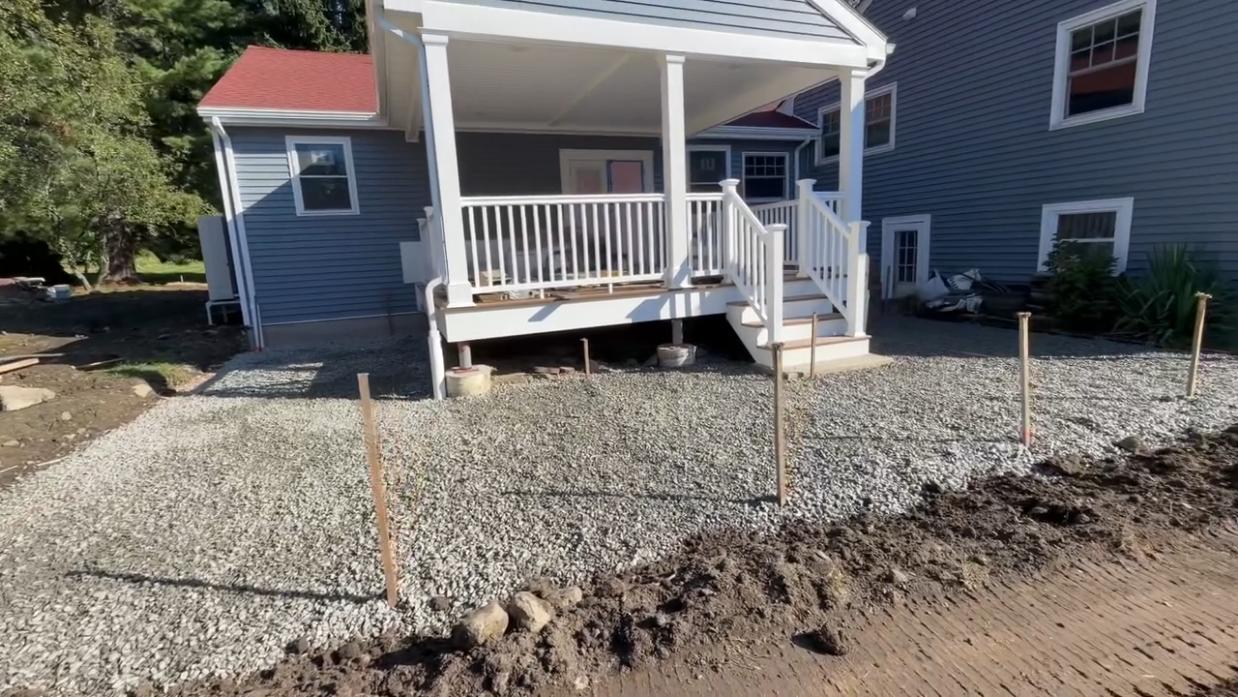
A successful paver project starts long before the finished pavers are visible. This image shows an important stage of paver patio base preparation, with a residential outdoor area excavated and covered with a layer of aggregate before the final surface is installed. Wooden stakes help establish the planned layout, while the prepared stone base provides the foundation for the future paved area. Proper preparation is a critical part of creating a stable and durable outdoor surface.
Why Paver Patio Base Preparation Matters
The finished pavers may be the most visible part of a patio, but the material underneath them plays a major role in the performance of the project. A properly prepared base provides support for the paving system and helps create a more stable surface.
Without appropriate preparation, a paved area can develop uneven sections or movement over time. The exact preparation required depends on site conditions, soil characteristics, drainage, intended use, and the type of paving materials selected.
This is why professional Paving Services typically begin with careful evaluation and preparation of the installation area rather than immediately placing the finished surface.
Preparing the Site Before Pavers Are Installed
The image shows an active construction area around an existing residential porch. Much of the soil has been removed, and a layer of crushed aggregate has been distributed across the planned outdoor space.
Site preparation generally involves establishing the project boundaries and determining the appropriate finished elevations. The wooden stakes visible in the image help mark the planned area and provide reference points during construction.
Proper layout is especially important when a new patio or paved area needs to connect with an existing porch, stairs, doorway, lawn, or other permanent feature.
Building a Stable Aggregate Base
The aggregate layer shown in the image is an important component of the paving foundation. It creates a structural base between the prepared ground and the eventual paving materials.
The depth and composition of the base should be selected according to the project requirements and site conditions. The material also needs to be distributed and compacted appropriately to create a consistent foundation.
A properly prepared aggregate base can help provide uniform support beneath the finished surface. This becomes particularly important across larger areas where inconsistent preparation could contribute to differences in elevation or surface stability.
Grading and Drainage During Patio Preparation
Water management should be considered while preparing the base rather than after the paving is complete. The finished surface needs appropriate grading so water can move away from structures and toward suitable drainage areas.
This is particularly important around a house and porch, as shown in the featured image. The relationship between the proposed paved area and the existing structure needs to be considered during layout and grading.
Proper site preparation can also help coordinate the elevation of the new patio with existing steps and entry points. A well-planned transition makes the completed outdoor area more functional and easier to navigate.
Preparing Around an Existing Porch
Installing a paved surface around an existing porch requires careful attention to the surrounding structures. The image shows the aggregate base extending toward the porch and stairs while leaving the structure itself intact.
The new surface needs to meet the existing entry area at an appropriate elevation. The layout also needs to account for the available space around the porch and the desired shape of the future patio.
These considerations are part of professional Hardscaping Services, where the new paved area needs to work together with existing architectural and landscape elements.
Why Compaction Is Important
Simply placing aggregate over excavated soil is not enough to create a finished paving foundation. The base material needs appropriate compaction so it can provide consistent support for the layers installed above it.
Compaction helps reduce unnecessary movement within the base and contributes to a more uniform foundation. The process may need to be completed in stages depending on the depth of the base and the specific project conditions.
The prepared surface should be evaluated before the next stage of construction begins. Proper preparation at this point can make the subsequent installation process more predictable.
From Base Preparation to Finished Paving
The aggregate base shown in the feature image represents an early stage of a larger outdoor paving project. After the site and base are properly prepared, additional installation steps can follow, depending on the selected paving system.
These may include preparing the bedding layer, installing the pavers, establishing edge restraints, and completing the joints and final surface.
The finished result should connect naturally with the home’s porch and surrounding landscape. Landscape Installation can also be coordinated with the paving project when lawn areas, planting beds, or other landscape elements are part of the overall property improvement.
Planning a Durable Outdoor Paving Project
Good paving begins with what happens beneath the visible surface. Careful layout, excavation, grading, aggregate placement, and compaction all contribute to the foundation of the finished project.
For homeowners considering a new patio or outdoor paved area, understanding the preparation stage can make it easier to evaluate the scope of the project. The image demonstrates why the construction process may look very different before the finished pavers are installed.
A professional approach to paver patio base preparation helps establish the foundation needed for the next stages of construction while allowing the new outdoor area to be properly integrated with the existing home.
MDZ Crew Landscaping & Paving Inc. provides professional landscaping and paving solutions for residential outdoor spaces, including projects that require careful site preparation before the finished surface is installed. For a paver patio project, proper planning, grading, aggregate preparation, and coordination with existing porches and walkways can help create a well-integrated outdoor area. Homeowners considering a new patio or other paved surface can work with MDZ Crew Landscaping & Paving Inc. to plan the project around the property’s existing layout and landscape features.
FAQ
What is paver patio base preparation?
Paver patio base preparation is the process of preparing the ground beneath a future paver surface. It can include excavation, grading, aggregate placement, and compaction before the final paving materials are installed.
Why is aggregate used under pavers?
Aggregate provides a structural foundation beneath the paving system. Properly installed aggregate can provide consistent support for the layers above it.
Does a paver patio need proper grading?
Yes. Grading is an important part of preparing an outdoor paved area because it helps direct water appropriately and establishes the correct relationship between the new surface and surrounding structures.
How does patio preparation work around an existing porch?
The layout and elevations need to be planned around the existing porch, stairs, doors, and other permanent features. The prepared base must allow the finished patio to connect appropriately with these structures.
Is site preparation necessary before paver installation?
Yes. Proper site preparation establishes the foundation for the finished paving system. The required preparation depends on soil conditions, drainage, project size, intended use, and the selected paving materials.