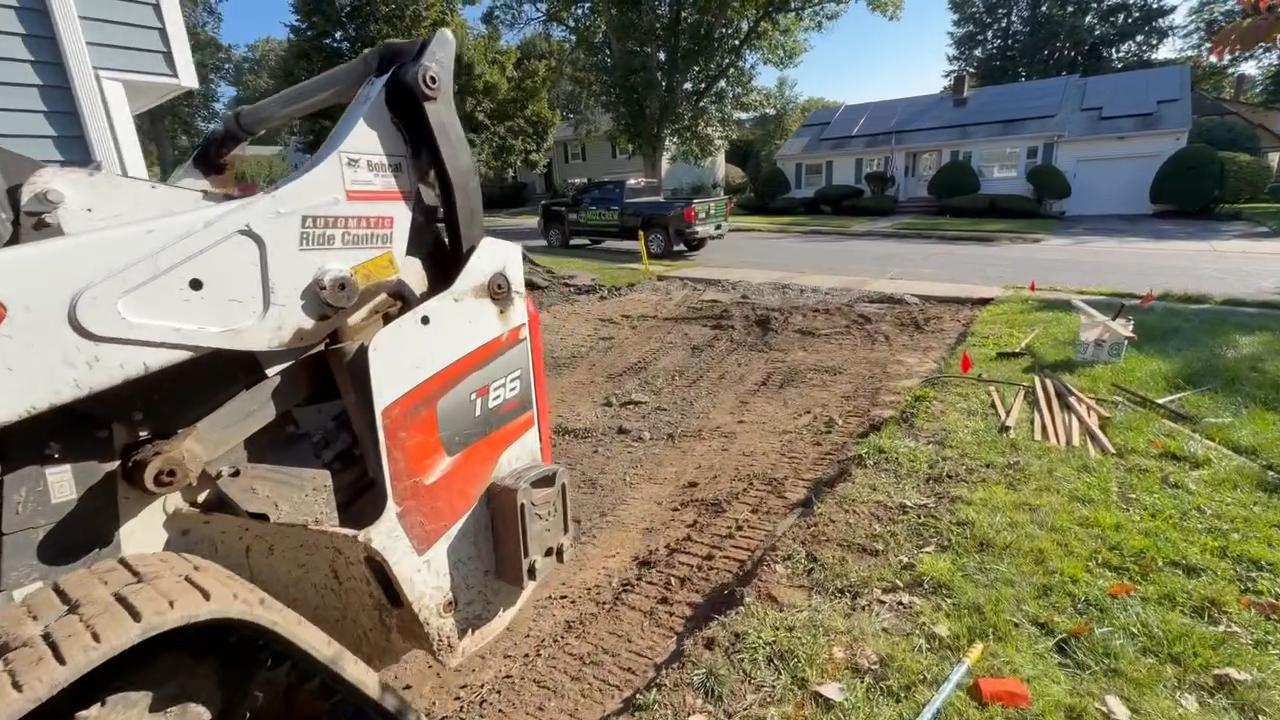
A successful patio project begins before the first paver or other finished surface material is installed. This image shows residential excavation for patio installation in progress, with a compact skid steer preparing a backyard area for a new outdoor surface. The existing soil has been removed and the project area is being shaped to establish the appropriate foundation and layout. Proper excavation is an important first stage when transforming an existing yard into a functional patio or outdoor living area.
Why Residential Excavation Matters for Patio Installation
A new patio needs more than an attractive finished surface. The ground underneath must be properly prepared to support the planned paving system and accommodate the property’s existing grades.
Excavation creates the space needed for the base materials and finished patio. It also allows the installation area to be adjusted to the appropriate elevation relative to the house, lawn, walkways, steps, and other surrounding features.
The amount of excavation required can vary depending on the existing soil, project design, drainage conditions, patio materials, and intended use.
Preparing the Backyard for a New Patio
The featured image shows a residential yard where the proposed patio area has been cleared and excavation work is underway. A compact skid steer is being used to remove and move soil efficiently across the work area.
Mechanical excavation can be especially useful for larger residential projects where significant amounts of soil need to be removed or redistributed.
Before excavation begins, the project area should be laid out carefully. Stakes and markings can establish the intended boundaries and help guide the shape and dimensions of the future patio.
Establishing the Correct Patio Elevation
One of the important purposes of excavation is establishing the correct elevation for the future patio.
The new outdoor surface needs to work with existing features such as exterior doors, porches, steps, walkways, and lawn areas. If the finished elevation is not planned correctly, the patio may not transition smoothly into the surrounding property.
Excavation allows the construction team to establish the space required for the complete paving system while maintaining the desired relationship between the patio and the home.
This is particularly important for projects where the patio will connect directly to an existing entrance or outdoor living area.
Managing Soil and Site Conditions
Every residential property has different soil and site conditions. During excavation, the existing ground needs to be evaluated to determine how the project area should be prepared for the next construction stage.
Soil may need to be removed, redistributed, or prepared before the base materials are installed. The excavation process also provides an opportunity to identify site conditions that could affect the final patio design.
Proper preparation can help create a more consistent foundation for the layers that follow.
For homeowners planning Landscape Installation, coordinating excavation with the overall landscape design can also help preserve the intended relationship between the future patio, lawn, planting areas, and other outdoor features.
Excavation and Patio Drainage
Drainage should be considered during the excavation and grading stage rather than after the patio has been completed.
The project area needs to be shaped so the finished surface can manage water appropriately. The grading plan should account for the home’s location, surrounding lawn, existing drainage patterns, and other site features.
Good planning can help prevent water from being directed toward unwanted areas and allows the patio design to work more effectively with the existing property.
For larger outdoor improvements, excavation, grading, drainage, and paving should be considered as connected parts of the same project.
Using Equipment for Residential Excavation
The compact skid steer visible in the image is well suited to residential construction environments where maneuverability is important.
Equipment selection depends on the size of the project, site access, excavation depth, soil conditions, and the amount of material that needs to be moved.
On a residential property, careful equipment operation is particularly important because the work area may be close to the home, existing landscaping, driveways, utilities, or neighboring properties.
Professional Excavation Services can help coordinate this early stage with the later patio installation process.
Preparing for the Next Stage of Construction
Excavation is only one part of creating a finished patio. Once the appropriate soil has been removed and the area has been graded, the project can move toward preparation of the structural base and eventual installation of the selected paving materials.
The exact sequence depends on the patio design and materials being used.
Proper excavation provides the space needed for those subsequent layers. This makes the early construction stage just as important to the project as the visible finished surface.
MDZ Crew Landscaping & Paving Inc. for Residential Outdoor Projects
MDZ Crew Landscaping & Paving Inc. provides landscaping and paving solutions for residential outdoor projects where proper site preparation is an important part of the overall installation. From excavation and grading to paving and landscape improvements, coordinating the different stages can help create an outdoor space that works with the existing property. For homeowners planning a new patio, the excavation stage can establish the foundation for the next phases of construction.
Building a Patio From the Ground Up
The featured image illustrates an important part of the construction process that homeowners may not see once a patio is complete. Before the finished pavers or other surface materials are installed, the existing ground must be carefully prepared.
Residential excavation for patio installation establishes the space, elevation, and groundwork needed for the next stages of construction. When excavation is properly coordinated with grading, drainage, base preparation, and the final patio design, the project can move forward with a more organized foundation.
For homeowners considering a new patio, understanding the excavation stage can provide a clearer picture of what goes into creating a finished outdoor living area.
FAQ
What is residential excavation for patio installation?
Residential excavation for patio installation involves removing and preparing existing soil so there is adequate space for the patio’s base and finished surface. The work also helps establish the planned elevation and layout.
How deep should a patio area be excavated?
There is no single excavation depth that applies to every patio. The required depth depends on soil conditions, the paving system, base requirements, drainage, and the desired finished elevation.
Why is grading important during patio excavation?
Grading establishes the elevations needed for the finished patio and helps manage the direction of water across the property. It should be planned in relation to the house and surrounding landscape.
Can a skid steer be used for residential patio excavation?
Yes. Compact equipment such as a skid steer can be useful for residential excavation because it can remove and move soil efficiently while maneuvering within many residential work areas.
What comes after patio excavation?
After excavation, the project generally moves into additional site and base preparation before the finished paving materials are installed. The exact sequence depends on the patio design, materials, and site conditions.