
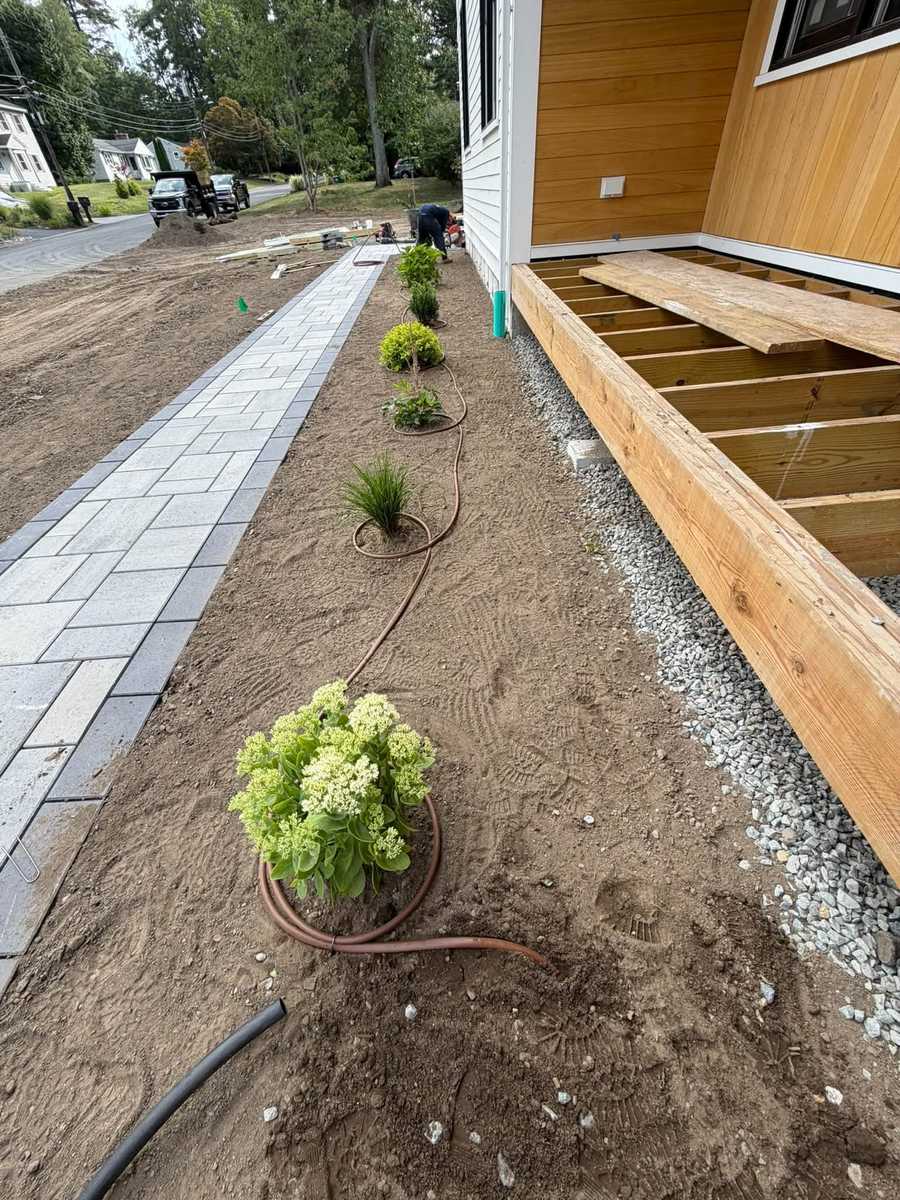
A paver walkway can make the route to a home more defined and inviting, but the planting area beside the walkway determines how the space feels as it matures. Foundation planting should complement the walkway, leave enough room for access, and provide a manageable transition between the home, plants, soil, and hardscape.
Start With the Walkway and Foundation Relationship
Foundation planting works best when the walkway and planting bed are treated as connected parts of the same landscape. The bed should have enough width for the chosen plants while keeping the paved path open for normal foot traffic.
Consider doors, stairs, utility areas, windows, and maintenance access before selecting plant locations. This helps avoid a design that looks good at installation but becomes crowded as plants grow.
Choose Plants Based on Mature Size
Small plants can appear well spaced when first installed, but many will expand considerably as they mature. Measure the expected spread of each plant and leave appropriate room between the foundation, path, and neighboring plants.
Compact shrubs and structured perennials are often useful near a paver walkway because they can create a defined planting rhythm without overwhelming the path. A mix of plant heights can add interest while keeping the walking route visually clear.
Keep the Walking Surface Clear
Planting should frame the walkway rather than narrow it. Branches, stems, and groundcover that spread into the walking area can make routine maintenance harder and may reduce usable path width.
A clearly defined planting bed can make edging and trimming easier. It also gives the hardscape a finished border that can remain visible throughout the growing season.
Plan Drainage Before Adding Soil
Foundation planting should be planned with drainage in mind. Soil should not be added against the home in a way that changes intended water movement or creates conditions where moisture collects next to the foundation.
The walkway also needs proper grade so water can move away from the walking surface. Landscaping materials should support that drainage plan instead of creating low spots beside the pavers.
For broader outdoor grading and landscape preparation needs, visit our landscaping services page.
Create a Balanced Planting Line
A planting line does not have to be perfectly straight. Curves can soften a rigid walkway, while a more structured layout may suit formal residential designs. The key is consistency in spacing and plant scale.
Use a small number of repeated plant types when you want a cleaner appearance. Repetition can help connect the walkway to other landscape beds around the property without making the design feel crowded.
Use Mulch to Define the Planting Bed
Mulch can give a new planting bed a finished appearance and help keep the soil surface organized. It should be installed at an appropriate depth and kept from covering the walkway.
Seasonal maintenance may include refreshing mulch, removing weeds, trimming plants, and keeping loose landscape material away from the pavers. These simple tasks can preserve the separation between hardscape and planting areas.
Consider the Home’s Exterior When Selecting Plants
Plant selection can complement the color and style of the home’s exterior. A light-colored house may pair well with deeper foliage tones, while a more traditional exterior can work with structured shrubs and repeated foundation plants.
The goal is not to hide the home. Instead, the planting should create a visual connection between the house and the walkway while keeping windows, entrances, and important architectural features visible.
Why Professional Site Preparation Matters
Walkway landscaping involves more than placing plants in soil. Proper preparation can include establishing grades, preparing planting areas, coordinating hardscape edges, and creating clean transitions between different surfaces.
MDZ Crew Landscaping & Paving Inc handles landscaping and outdoor hardscape projects as part of a coordinated approach. You can also review our walkway services for additional hardscape options.
Design for Long-Term Maintenance
Before finalizing the layout, think about how the space will be maintained through the seasons. Leave practical access for mowing, trimming, watering, pruning, and cleaning the walkway.
Plants should be grouped according to their light and moisture requirements when possible. This can make watering and ongoing care more efficient and can help keep the landscape looking consistent over time.
Benefits of Foundation Planting Along a Paver Walkway
A well-planned planting bed can soften the hardscape, frame the entrance, add seasonal interest, and make a walkway feel like an integrated part of the property. The strongest designs balance plant growth, access, drainage, and the existing architecture.
Frequently Asked Questions
What plants are good beside a paver walkway?
Plants with predictable mature sizes and manageable maintenance needs are often a good choice. The right selection depends on sunlight, soil, moisture, mature width, and how much space is available beside the walkway.
Can I put soil directly against my home’s foundation?
Foundation planting should be installed with the home’s drainage and grading in mind. Avoid raising soil in a way that interferes with intended water movement or creates moisture problems near the structure.
How do I keep plants from growing onto a paver walkway?
Choose plants that fit the available space, allow room for mature growth, and maintain the planting bed regularly. Proper edging and seasonal trimming can also help keep the walking surface clear.
Should a paver walkway have a planting bed beside it?
A planting bed is optional, but it can create a defined transition between the walkway and the rest of the yard. The bed should be sized around access, plant growth, and drainage requirements.