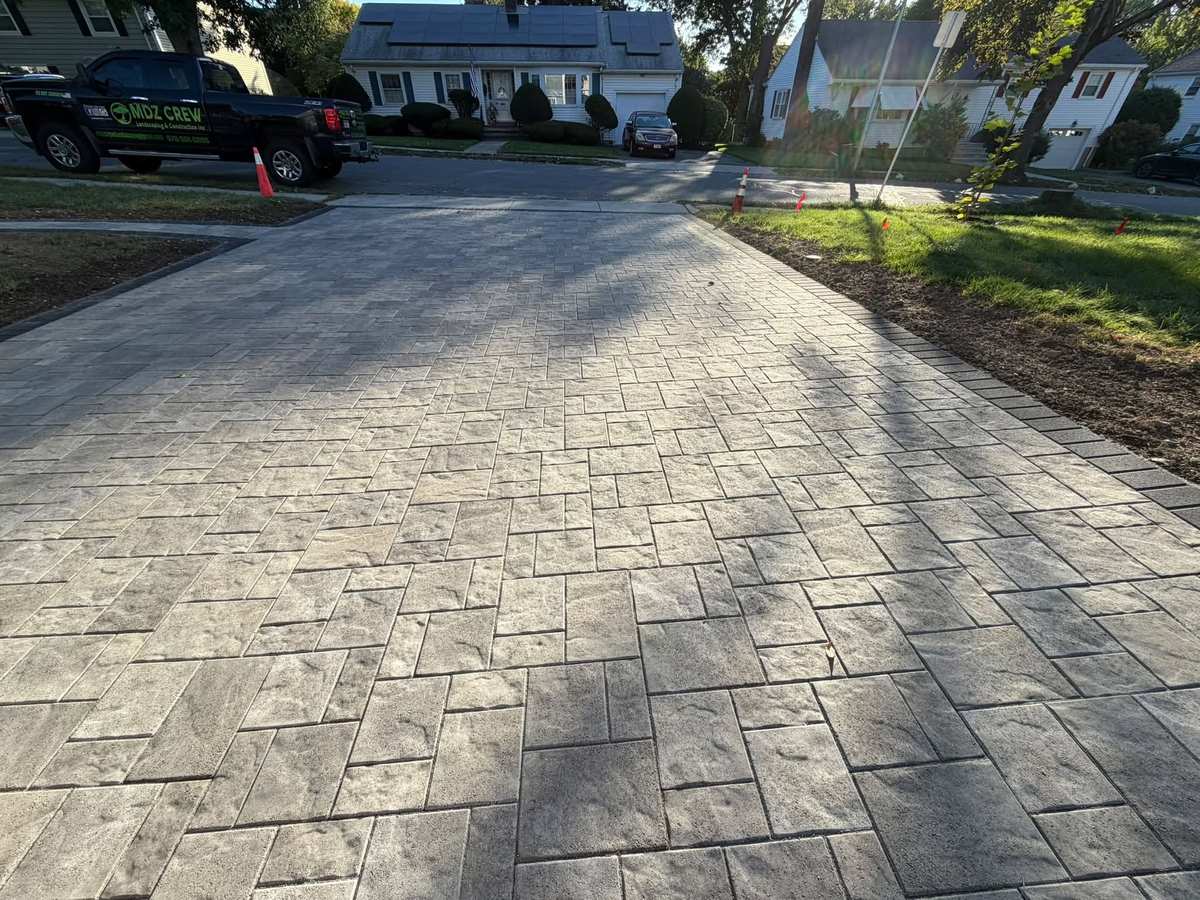
An interlocking paver driveway can create a strong entrance to a home, but the surrounding landscape plays an important role in how the entire property looks and functions. Lawn, planting beds, edging, and surface transitions should work with the driveway instead of making mowing, drainage, or routine maintenance more difficult.
Why the Landscape Around a Paver Driveway Matters
The area beside a driveway is exposed to foot traffic, vehicle movement, runoff, and regular lawn maintenance. A well-planned landscape helps create a clear separation between the paved surface and the surrounding yard while keeping the entrance visually balanced.
Instead of allowing grass and soil to run directly against every driveway edge, homeowners can use defined planting areas, neat borders, and carefully selected plants. These choices can help the driveway look more finished without taking attention away from the paving pattern.
Create a Clean Transition Between Pavers and Lawn
A sharp transition is one of the simplest ways to make an interlocking paver driveway look organized. The driveway edge should remain easy to see, while nearby lawn areas should have enough space for normal mowing and trimming.
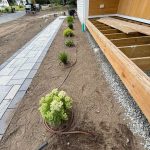
Where the grade and property layout allow it, a narrow landscape bed can create a visual buffer between grass and pavers. Low-growing plants can soften the hard edge without spilling into the driving area.
Use Planting Beds That Fit the Driveway Layout
Landscape beds beside a driveway should follow the shape of the paved area rather than creating awkward corners. Broad curves can work well on larger properties, while straight beds can complement a more formal driveway design.
Plant spacing is also important. Plants that remain compact can reduce the need for frequent pruning near vehicles. Taller plants should be positioned so they do not block sightlines at the driveway entrance or interfere with walking areas.
Protect Driveway Drainage With Smart Landscaping
Landscaping should never block the intended path of water. Paver driveways depend on correct grading and drainage details, so soil, mulch, and plant material need to be placed carefully around the edges.
Keep drainage paths, low points, and any designed runoff areas accessible. Avoid building landscape material against the pavers in a way that raises the soil level above the driveway edge. Good surface preparation and drainage planning can also reduce future settling and water-related problems.
For more information about driveway paving solutions, see our driveway paving services page.
Choose Low-Maintenance Plants Near the Driveway
Driveway planting areas are often better suited to plants that maintain a predictable size and do not require constant trimming. Low-growing shrubs, ornamental grasses, and compact perennial plantings can provide structure while leaving enough room around the paved surface.
Consider mature plant size instead of choosing plants only for their appearance when newly installed. This helps prevent branches from spreading over the driveway and keeps the border easier to maintain as the landscape develops.
Keep Mulch and Soil Off the Paver Surface
Landscape mulch can improve the appearance of planting beds, but it should stay inside the bed. Heavy mulch buildup against pavers can make the driveway edge less defined and may move onto the paved surface during heavy rain.
A properly defined bed with a stable border can help keep landscape material where it belongs. Regular seasonal maintenance should also include removing loose debris from the driveway surface and refreshing planting areas when necessary.
Coordinate Paving and Landscaping During a New Project
When a driveway and landscape are planned together, grading, bed placement, planting locations, and access can be considered as one project. This can make it easier to establish consistent transitions between hardscape and softscape.
MDZ Crew Landscaping & Paving Inc provides landscaping and paving services designed for residential outdoor improvements. Explore our landscaping services to see how landscape improvements can be incorporated around hardscape areas.
Common Mistakes to Avoid Around a Paver Driveway
One common mistake is planting too close to the driveway edge. Another is allowing soil or mulch to build above the paving surface. Poorly planned drainage paths and oversized plants can also create maintenance problems.
It is also important to leave practical room for mowing, trimming, snow management, and vehicle access. A landscape can look attractive at installation while becoming difficult to maintain later if these everyday needs are ignored.
Benefits of a Well-Planned Driveway Landscape
A thoughtful landscape around an interlocking paver driveway can improve the appearance of the front yard, define the entrance, simplify routine maintenance, and help hardscape and planting areas feel connected. The best design is one that combines appearance with practical access, drainage, and long-term care.
For homeowners planning a larger outdoor renovation, the MDZ Crew Landscaping & Paving Inc. to explore landscaping and paving solutions.
Frequently Asked Questions
What should I plant around an interlocking paver driveway?
Choose plants based on mature size, maintenance needs, sunlight, and their distance from the driving surface. Compact shrubs, ornamental grasses, and low-growing perennials can work well when they have enough room to mature.
Can landscaping affect paver driveway drainage?
Yes. Soil, mulch, and plant beds can affect how water moves around the driveway if they are installed at the wrong elevation or block designed drainage paths. Landscaping should work with the existing grading rather than obstructing runoff.
How far should plants be from a paver driveway?
There is no single distance for every property. The correct spacing depends on the plant’s mature size, the driveway layout, mowing access, and drainage conditions. Planning for mature growth is more important than using one fixed measurement.
Is it better to install the driveway or landscaping first?
For a coordinated project, paving and landscape planning should be considered together. Site grading, access, drainage, bed layout, and final elevations can then be planned as part of one overall design.