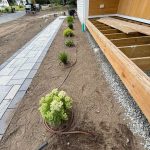
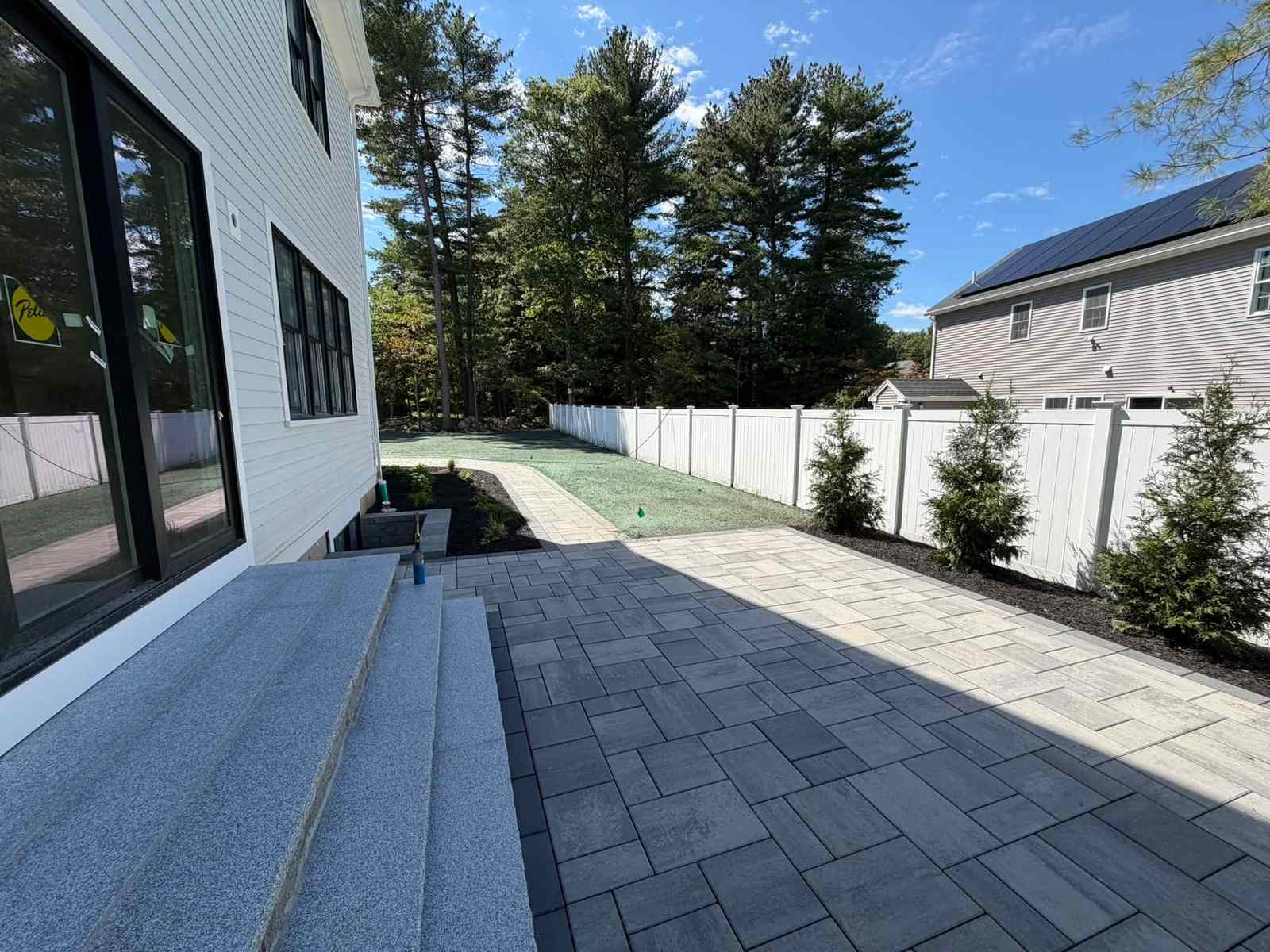
A paver patio beside a vinyl fence creates a useful outdoor area, but the narrow space between the hardscape and the fence needs careful planning. Planting, edging, drainage, and access should work together so the patio remains comfortable to use and the fence stays easy to maintain.
Why the Space Along a Vinyl Fence Needs Planning
The strip beside a fence can quickly become difficult to manage when plants, mulch, and soil are placed without considering mature growth. A planned landscape border can soften the fence line while keeping the patio edge clean and accessible.
The most practical design starts by deciding how much space is needed for the fence, plants, drainage, and routine maintenance. This helps avoid crowding the patio or creating unnecessary work later.
Create a Defined Edge Between Patio and Planting Area
A clear boundary helps separate the paver surface from the planting bed. The border may be straight or gently curved depending on the patio layout and overall landscape design.
Keeping the planting area clearly defined also helps with sweeping, cleaning, and seasonal maintenance. Loose soil and mulch should stay within the bed instead of spreading across the patio.
Give Plants Enough Room to Mature
When planting close to a vinyl fence, select plants according to their mature height and spread. Dense growth can make fence maintenance harder and may reduce the open space around the patio.
Low-growing plants can soften the base of the fence, while carefully placed shrubs can add privacy and structure. Avoid choosing plants only by their size at installation; mature dimensions are more important for a long-term design.
Protect Drainage Around the Patio and Fence
Water management should be considered before the planting bed is finished. The patio needs proper grading so water does not collect on the paved surface, while the fence-line landscape should not create a raised area that changes intended runoff.
Soil and mulch should be kept at appropriate elevations. Maintaining clear drainage paths can help protect both the patio area and the surrounding landscape from avoidable water-related issues.
For additional information about hardscape construction and outdoor improvements, see our patio paving services page.
Use the Fence as a Visual Backdrop
A vinyl fence can provide a clean background for landscape planting. Repeated shrubs, ornamental grasses, or simple planting groups can create a neat border without making the patio feel enclosed.
Plant color and texture can also help connect the fence to the patio surface and the rest of the yard. The design should remain proportional so the fence does not become visually hidden by oversized planting.
Keep Patio Access Open
Patio landscaping should never make it difficult to move around furniture, doors, steps, or other outdoor features. Leave practical walking space between the patio and any larger plants.
This is especially important along side passages and narrow areas. A planting plan that works on paper may become difficult to use once shrubs and perennials reach full size, so mature spacing should always be considered.
Choose Mulch and Groundcover Carefully
Mulch can give a fence-line bed a finished appearance, while groundcover can create a softer transition between hardscape and fence. Whichever material is selected, it should remain controlled and easy to maintain.
Keep mulch away from the patio surface and avoid excessive buildup along the fence. Seasonal refreshing, weeding, and edge maintenance can help the area remain neat through changing weather.
Coordinate Patio Paving With Landscaping
Patio paving and landscaping are easier to coordinate when the layout is considered as one project. The final grades, planting bed width, patio edges, access routes, and drainage can be planned together rather than adjusted separately after installation.
MDZ Crew Landscaping & Paving Inc provides residential landscaping and paving services for outdoor improvements. Review our landscaping services for planting, lawn, and landscape-related options.
Design for Low Maintenance
A successful patio landscape should be attractive without requiring constant attention. Use plants that suit the site, keep the planting area easy to access, and avoid complicated arrangements that create many hard-to-reach spaces.
Routine maintenance can include trimming, weeding, mulch renewal, leaf removal, and keeping the patio surface clear. These basic tasks become easier when the original design leaves enough room between the hardscape and planting.
Make the Patio and Fence Feel Connected
The patio and fence should look like parts of the same outdoor space. Consistent plant groupings, clean borders, and carefully selected textures can connect the two elements while keeping each functional.
The result can be a more organized patio edge, a softer fence line, and a landscape that remains practical for regular outdoor use.
Explore the MDZ Crew Landscaping & Paving Inc for additional landscaping and paving solutions.
Frequently Asked Questions
Can I plant directly along a vinyl fence beside a paver patio?
Yes, a planting bed can be placed along a vinyl fence beside a patio when there is enough room for mature plant growth, maintenance access, and proper drainage. The layout should avoid crowding the patio or fence.
What plants work well beside a vinyl fence?
Plants with predictable mature sizes and manageable growth are generally easier to use in a narrow fence-line bed. The best choice depends on available sunlight, soil, moisture, and desired height.
How do I keep mulch off a paver patio?
A clearly defined planting bed and stable edge can help keep mulch in place. Regular maintenance should include sweeping loose material from the patio and refreshing the bed when needed.
Does a fence affect patio drainage?
A fence itself does not determine patio drainage, but the area beside the fence can affect how water moves if soil or landscaping changes the grade. Patio and landscape elevations should be planned together.